

Introduction
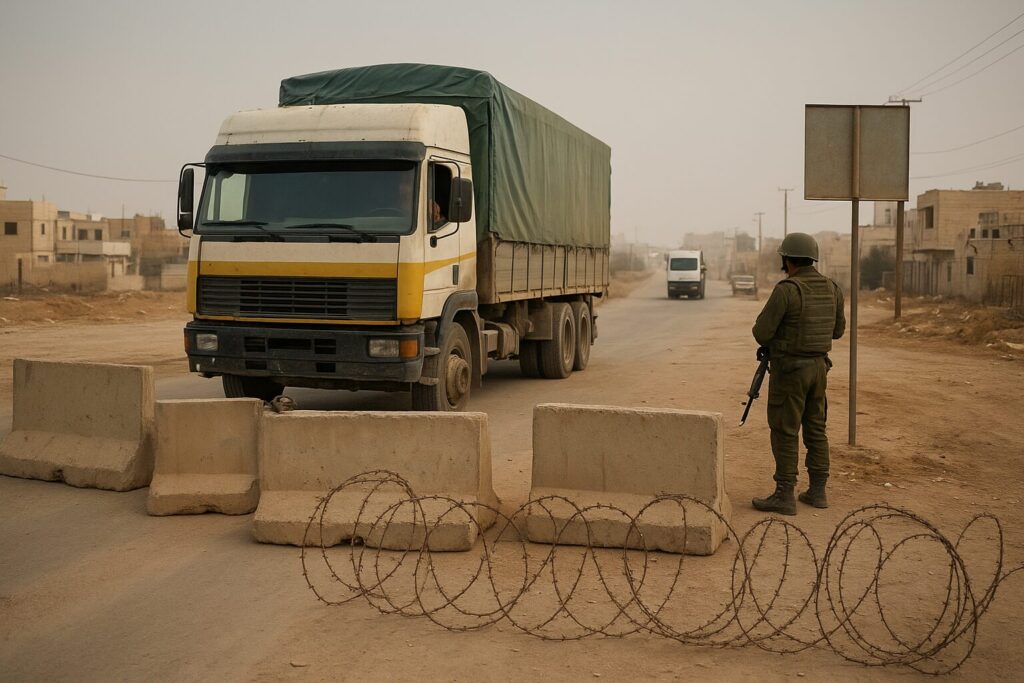
A blockade is the intentional restriction or prevention of goods, people, or communication from entering or leaving a specific area, usually occurring during times of war or conflict. Governments or military forces often use blockades to weaken an adversary economically, militarily, or politically. They can target land routes, sea lanes, or airspace, and are frequently employed to exert pressure on a country, military faction, or population without direct combat. While blockades can help achieve strategic goals, they often lead to significant humanitarian consequences for civilians.
Definition and Types
A blockade is an action aimed at isolating a region, city, or nation to control the movement of people, resources, and trade. Key types include:
- Naval Blockade – Restriction of access to ports and waterways to halt trade or military shipments.
- Land Blockade – Controlling roads, borders, or checkpoints to limit movement into or out of a territory.
- Air Blockade – Preventing aircraft from entering or leaving a particular airspace.
- Economic Blockade – Imposing trade restrictions or sanctions to weaken a country’s economy without using direct military force.
Purpose of a Blockade
Blockades are implemented for a range of strategic, military, and political reasons:
- Military Pressure – Limit the enemy’s access to weapons, supplies, or reinforcements.
- Economic Weakening – Disrupt trade, revenue streams, and supply networks.
- Political Leverage – Force negotiations or compliance with demands.
- Containment – Prevent the expansion of influence or insurgency from a specific area.
Legal and Ethical Considerations
International law governs blockades, particularly under the Hague Conventions (1907) and the UN Charter:
- Blockades must be formally declared and communicated to neutral parties.
- Civilians must not be intentionally targeted.
- Starvation or deprivation of civilian populations as a method of warfare is prohibited.
Violating these rules can result in international criticism or accusations of war crimes.
Impacts of a Blockade
- Humanitarian Impact – Shortages of food, medicine, and essential services can lead to suffering and malnutrition.
- Economic Impact – Trade disruptions, inflation, unemployment, and financial hardships may follow.
- Social Impact – Restricted movement can isolate communities, reduce access to education and healthcare, and create widespread distress.
- Political and Strategic Impact – Blockades can pressure governments to negotiate but may also trigger resistance, unrest, or escalation of conflict.
Historical and Modern Examples
- Napoleonic Wars – Britain’s naval blockade disrupted trade with France.
- Cuban Missile Crisis (1962) – The U.S. imposed a naval blockade to prevent Soviet missiles from reaching Cuba.
- Gaza Blockade – Israel and Egypt maintain restrictions on Gaza, affecting the flow of goods, humanitarian aid, and civilian mobility.
- North Korea Sanctions – International economic blockades aim to curb the country’s nuclear ambitions.
Challenges and Controversies
Blockades often face criticism due to:
- Humanitarian Crises – Civilian populations frequently suffer shortages and hardships.
- International Tensions – Blockades may strain diplomatic relations or provoke retaliation.
- Enforcement Difficulties – Smuggling and covert trade can undermine their effectiveness.
Conclusion
Blockades are a strategic measure used to isolate and pressure opponents during wars and political conflicts. Although they can achieve military and political objectives, their humanitarian consequences often make them controversial under international law. Understanding blockades is crucial to assessing their effects on conflicts, civilians, and international relations.
