

Introduction
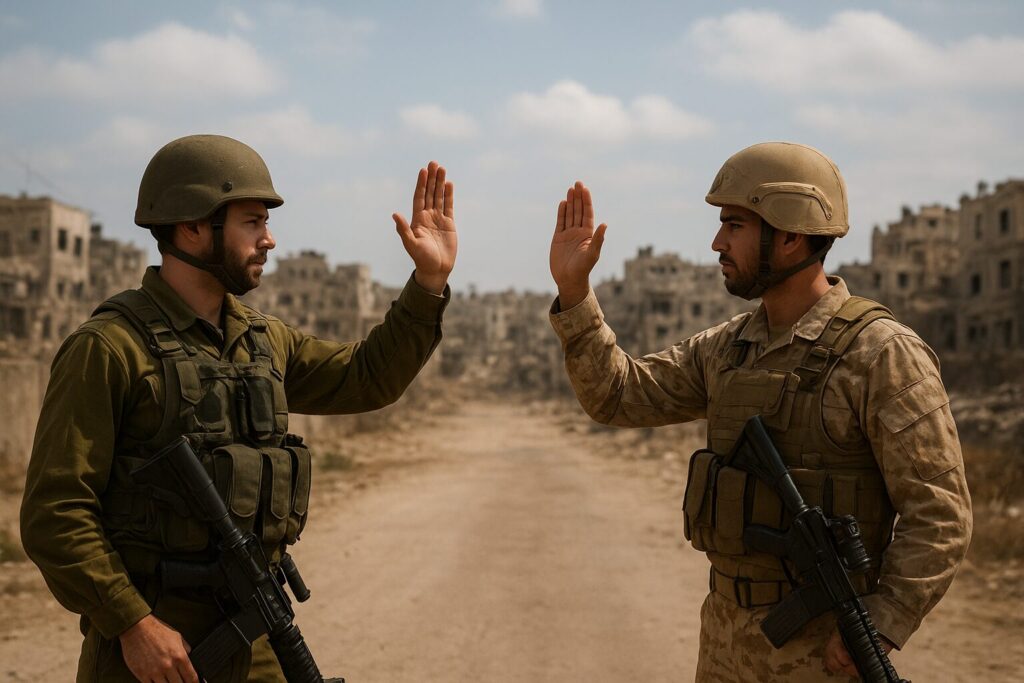
A ceasefire is an arrangement in which opposing parties agree to halt hostilities, either temporarily or permanently. Such agreements can take place between nations, political factions, or non-state armed groups during conflicts or wars. Ceasefires often act as an important precursor to peace negotiations, the delivery of humanitarian aid, or the reduction of violence. Although they do not always resolve the underlying conflict, ceasefires create opportunities for dialogue, limit casualties, and restore a degree of stability.
Definition and Legal Context
In international law, a ceasefire is defined as a formal or informal suspension of combat, which can be established either bilaterally or multilaterally. Ceasefires may be:
- Temporary – A short-term pause in fighting to allow negotiations, humanitarian assistance, or other purposes.
- Indefinite – Without a set end date, though not necessarily constituting a permanent peace settlement.
Compliance is often monitored by international organizations or neutral observers. Breaches of a ceasefire can carry legal and political repercussions under international humanitarian law.
Purpose of a Ceasefire
Ceasefires serve several key purposes:
- Humanitarian Relief – Facilitates the delivery of aid, medical evacuations, and safe passage for civilians.
- Conflict De-escalation – Reduces immediate violence and prevents further destruction.
- Negotiation Facilitation – Provides a setting conducive to peace talks or political discussions.
- Building Trust – Helps warring parties establish confidence for potential long-term agreements.
Types of Ceasefire
- Local Ceasefire – Restricted to a specific area, often temporary, addressing immediate crises.
- Global Ceasefire – Enforced across the entire conflict zone, frequently under international mediation.
- Unilateral Ceasefire – Initiated by one party without mutual commitment, often for strategic or political reasons.
- Mutual Ceasefire – Both parties agree to stop fighting, typically as part of peace negotiations.
Implementation and Challenges
Implementing a ceasefire can be challenging due to:
- Lack of Trust – Parties may fear breaches or hidden motives.
- Fragmented Groups – Decentralized armed groups might refuse to comply.
- Monitoring Difficulties – Ensuring adherence requires observers, technology, and reporting systems.
- Spoilers – Certain factions may intentionally disrupt ceasefires to gain leverage or derail negotiations.
Historical and Modern Examples
- Korean War (1953) – An armistice ended combat but did not result in a formal peace treaty.
- Israel-Hamas Conflicts – Ceasefires have been brokered to halt rocket attacks and facilitate humanitarian aid.
- Syrian Civil War – Various UN-mediated ceasefires have temporarily reduced fighting in selected areas.
Importance of Ceasefire
- Humanitarian – Reduces civilian suffering and prevents casualties.
- Political – Opens avenues for longer-term negotiations and conflict resolution.
- Psychological – Offers relief and hope to populations enduring prolonged conflict.
- International Relations – Signals a commitment to peace and can impact global diplomacy.
Conclusion
Ceasefires are an essential tool in managing conflicts. While not a permanent solution, they provide critical opportunities for dialogue, humanitarian assistance, and progress toward lasting peace. Understanding the mechanisms, challenges, and benefits of ceasefires is crucial for policymakers, humanitarian organizations, and the global community aiming to mitigate the effects of war and foster sustainable conflict resolution.
