

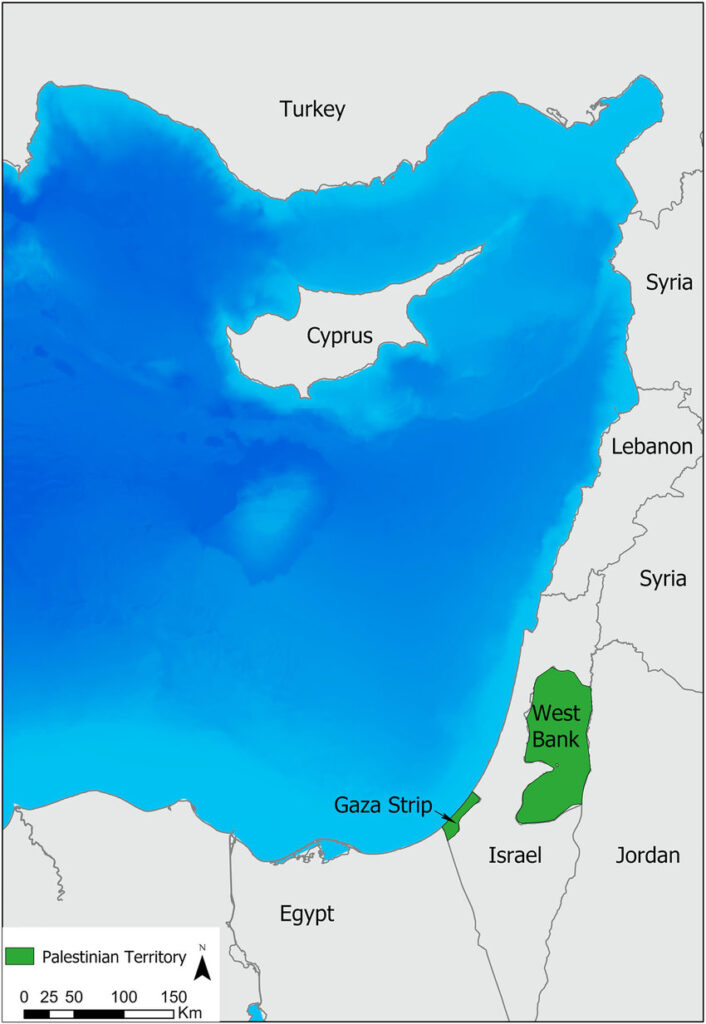
The Gaza Strip, commonly referred to as Gaza, is a small stretch of land located along the southeastern edge of the Mediterranean Sea, covering approximately 365 square kilometers (141 square miles). As of 2023, the region is home to about 2.2 million people. Gaza’s complex mix of historical significance, geographic constraints, and current realities has made it one of the most pressing humanitarian and political challenges in the modern world.
Historical & Geographical Context
Situated between Israel and Egypt, Gaza lies on a narrow coastal plain. The area has been continuously inhabited for thousands of years, with the city of Gaza mentioned in ancient records dating back to the 15th century BCE.
The modern-day Gaza Strip was formed following the 1948 Arab–Israeli War, after which it came under Egyptian administration. In 1967, during the Six-Day War, Israel captured the territory, shaping much of its current political situation.
Economically, Gaza has long struggled with overpopulation, limited natural resources, and restrictions on the movement of goods and people — all of which have deeply hindered its development.
Humanitarian & Economic Conditions
Even before recent conflicts, Gaza faced extremely high unemployment, widespread dependence on international aid, and severe economic restrictions. Its infrastructure, including systems for water, sanitation, and electricity, has repeatedly been damaged and remains fragile due to ongoing blockades and military actions.
The population is overwhelmingly young, with children and youth making up a large share of Gaza’s residents.
Recent Conflict & Damage
On October 7, 2023, hostilities escalated sharply when armed factions in Gaza launched attacks into Israeli territory, prompting a significant military response. The aftermath has left widespread destruction — homes, schools, hospitals, and public infrastructure have been reduced to rubble or rendered unusable.
The United Nations has described the situation as a “humanitarian catastrophe of epic proportions,” warning of severe food shortages and the threat of famine in parts of the territory.
Current Challenges & What’s at Stake
- Humanitarian crisis: Over half of Gaza’s population is displaced or lacks reliable access to water, food, and shelter.
- Reconstruction: Rebuilding critical infrastructure such as schools, hospitals, and housing is expected to take many years, even under favorable conditions.
- Blockade and movement restrictions: Tight control of Gaza’s borders, airspace, and coastal access continues to limit trade, mobility, and humanitarian relief.
- Political complexity: Gaza’s governance remains distinct from the West Bank, with internal Palestinian divisions and regional dynamics adding to the difficulty of achieving lasting peace.
Why It Matters
The crisis in Gaza is first and foremost a humanitarian tragedy, with widespread civilian suffering and a profound impact on children.
At the same time, it holds regional and global implications — influencing neighboring countries like Egypt and Israel, while drawing international diplomatic attention and aid efforts.
Symbolically, Gaza represents the heart of the Israeli–Palestinian conflict, reflecting deeper questions about occupation, human rights, and statehood.
The way Gaza’s recovery unfolds — or fails to — will play a crucial role in shaping future peace, stability, and regional relations.
Conclusion
Gaza is a land defined by its rich history, enduring conflict, and remarkable resilience. Despite facing overwhelming adversity, its people continue to persevere. The region is more than a site of struggle; it is home to millions whose futures depend on meaningful political solutions and global awareness. Understanding Gaza requires recognizing its layers of history, politics, economy, and humanity — and acknowledging that what happens there resonates far beyond its borders.
