

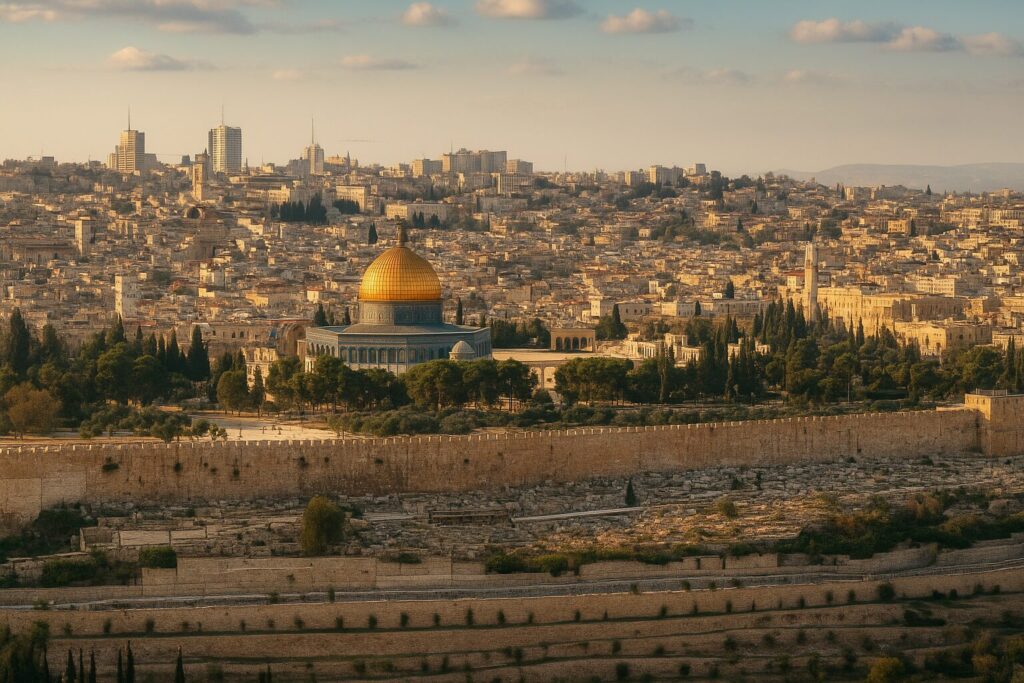
Jerusalem: The Timeless City of Faith and Heritage
Jerusalem stands as one of the world’s most ancient and revered cities, often referred to as the “City of Peace.” Located in the heart of the Middle East, it holds deep religious, cultural, and historical importance for billions across the globe. Ironically, though its name signifies peace, Jerusalem has endured centuries of conflict — yet it continues to shine as a symbol of resilience, spirituality, and hope.
Historical Overview
The origins of Jerusalem trace back more than 5,000 years. Throughout the ages, it has been conquered, destroyed, and rebuilt by numerous empires, including the Babylonians, Persians, Romans, Byzantines, and Ottomans. Around 1000 BCE, King David established Jerusalem as the capital of ancient Israel, and his son Solomon constructed the First Temple, marking it as the sacred heart of Jewish faith.
For Christians, Jerusalem holds immense significance as the place where Jesus Christ preached, was crucified, and rose from the dead. For Muslims, it is the location of the Al-Aqsa Mosque and the Dome of the Rock, from which the Prophet Muhammad is believed to have ascended to heaven during the Isra and Mi’raj. These intertwined religious ties make Jerusalem one of the holiest cities on Earth.
Spiritual Importance
Jerusalem is extraordinary for being sacred to three major monotheistic faiths: Judaism, Christianity, and Islam.
- To Jews, the Western Wall remains the most sacred site, being the last remnant of the Second Temple.
- To Christians, the Church of the Holy Sepulchre is revered as the place of Jesus’s crucifixion and resurrection.
- To Muslims, the Haram al-Sharif (Noble Sanctuary) ranks among Islam’s most sacred sites.
This shared spiritual heritage has united believers while also fueling divisions throughout history.
Jerusalem in the Modern Era
Today’s Jerusalem blends the old with the new — where ancient architecture coexists with modern life. The city is proclaimed the capital of Israel, a status that remains highly disputed in global politics. The eastern part of Jerusalem, largely inhabited by Arabs and home to Islamic landmarks, is envisioned by Palestinians as the capital of their future state. This long-standing contention keeps Jerusalem at the heart of the Israeli-Palestinian conflict and international peace negotiations.
Cultural and Architectural Legacy
Jerusalem is often described as a living monument to human civilization. Its Old City, divided into Jewish, Christian, Muslim, and Armenian quarters, is enclosed by majestic stone walls erected in the 16th century under the Ottoman Sultan Suleiman the Magnificent. Within these walls lie narrow streets, lively bazaars, and sacred shrines, offering a unique mix of faith, culture, and daily life that gives the city its distinctive spirit.
Conclusion
Jerusalem is far more than just a city — it is a symbol of humanity’s enduring quest for faith, peace, and identity. Though marked by centuries of struggle and division, it continues to inspire millions as a beacon of devotion and hope. The story of Jerusalem mirrors the story of human civilization itself — one of perseverance, conflict, and the eternal pursuit of harmony.
